Labor market blueprint for 2026.
“Claudia Indreica, recruitment expert: ‘It will be a tough year, let’s be realistic’ / ‘Some companies are still adjusting, while others are growing.”
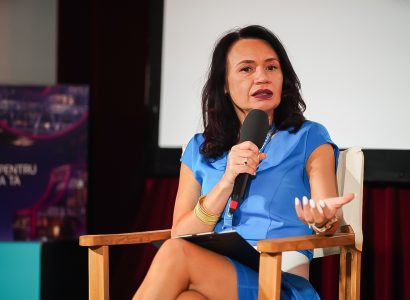
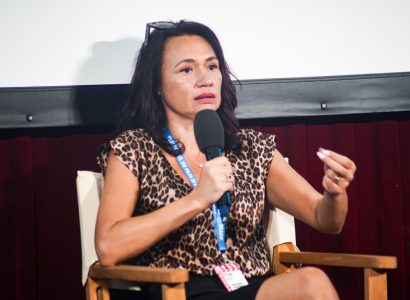
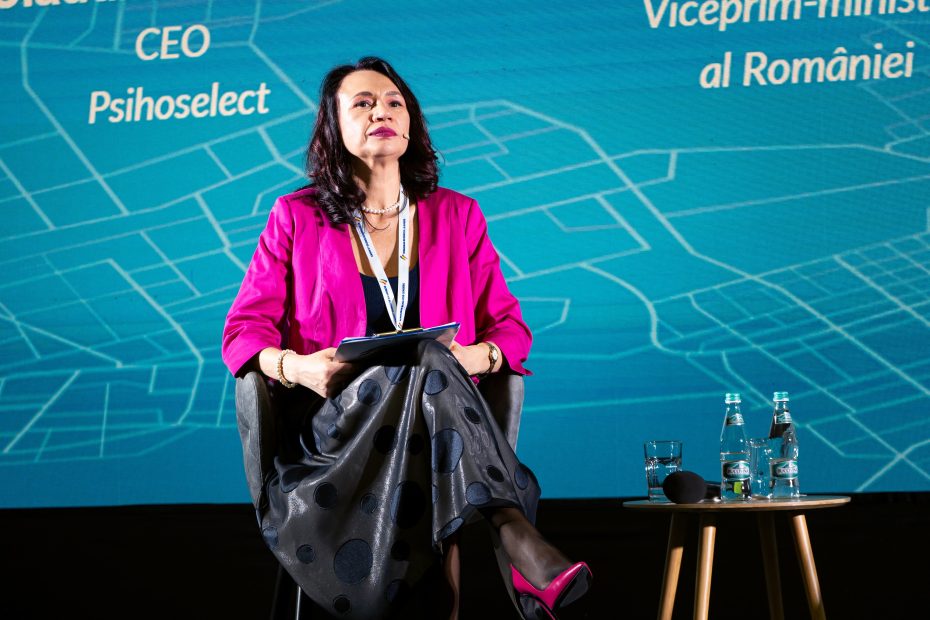
Another year of tensions on the labor market lies ahead, with ongoing news of layoffs alongside companies that continue to expand, estimates Claudia Indreica, CEO of Psihoselect. With extensive experience in recruitment and headhunting for top and middle management, Indreica—who also leads the ‘Labor Market’ Task Force within the Romanian Business Leaders association—outlines for Economedia the HR landscape during a period of significant turbulence and unknowns in the job market.
Economedia: What do the next months look like on the labor market, from your point of view, including that of the Romanian Business Leaders members and your partners? We are coming after a complicated year, with many layoffs, factories closing, a year with a lot of bad news on the labor market. What’s next in 2026? What are your signals?
Claudia Indreica: I think it’s going to be a tense year. We must be realistic, not to build realities that have nothing to do with what is happening. So it will be a year with tensions. There are companies that are still going through these stages of adjustment, of optimization. Some of them are making them quite difficult, in the sense that they are not paying attention to the fact that, once the number of people is optimized, the organization will perform further. And there will be tensions there, because the disengagement of people, once they perceive the incorrectness of the process, is quite high. When making such cuts, the key is to follow clear criteria, which are as transparent as possible, and on the other hand say what their objective is. That is when we talk about discounts. On the other hand, there are companies that are expanding. There are organizations where they are downsizing to more expensive locations and there are expansions of locations that provide infrastructure or where there are better costs for a new investment, a new hall. And then relocations can happen. I was just talking to the CEO of a company that is expanding in the Arad area. So there are areas with pluses and areas with minuses. The automotive industry has started to reorient itself, has started to move towards more optimized areas in terms of products, production cycle and market demand. As such, here, too, we have a good chance of moving to some products and capitalizing on this mass production. This is an important asset of this industry. It will perhaps also be a year of expansions. Maybe not so much a year of new openings as a year of expansions. We have this deadline of joining the Organization for Economic Cooperation and Development (OECD) in June, which should lead to increased confidence in Romania in general and, therefore, to interest in investing in Romania. As such, a very good wave of investment may come in the second half of the year and then our optimism is already growing. But joining the OECD is a necessary precondition.
Economedia: Are there sectors where the turbulence will continue to have an impact and others that are more sheltered? You were saying, for example, about automotive, that here things somehow seem to be settling down.
Claudia Indreica: Yes, in automotive they seem to be settling down. One area that is still going through some transformational stages is IT, which for about two years, almost three, has been in a turmoil. Artificial Intelligence has also come over, so it’s still settling down, reforming, optimizing. There we will have at least another year, if not more, of this kind of movement. The sad fact is that in this field, in IT, there is very little entry-level, entry-level hiring. It’s going to be difficult for these companies to realize their mid-level. This is the way it works here: you bring in entry-level people, they will come into the company and get to the mid-level, and then they move up to the senior level. But if you have one, two, three years without entry-level people, you don’t have that training loop afterwards. That’s where solutions will have to be found internally, because the mid-level people will also want to move into the senior level.
Economedia: That is to say, for the time being, intervention measures are being taken for the time being, somehow, without a very clear perspective on what the future will hold.
Claudia Indreica: When the pressure is high, such decisions are made. Sometimes you make mistakes – smaller, bigger. The key is to learn from them.
You were talking about investment and the impact of Romania’s membership in this select group (OECD). Are there such signals – are there investors sniffing around or are there sectors for which Romania is still interesting, even if costs are no longer a competitive advantage?
Claudia Indreica: Costs are no longer an advantage. We can talk about opportunities in areas where optimization can be achieved or where we can come up with another approach, another paradigm. For example, in the agricultural sector, in the food sector. Food is a very interesting area. Romania has a good infrastructure and quality land. It remains to be seen how to combine foreign investment with inward investment. A mix of financing would also help here. Clearly, long-term solutions in Romania will have to have a mix of financing, not only from banks, but also from private equity and venture capital, for example. Another important area is defense. We are starting with dual-use, with products such as drones that can be used in agriculture and in the military or other sectors. Such products exist to the extent that you find the market for them – you go either one way or the other for their production. Bearing in mind that what we mean by defense production has certain certification requirements and certain stages to go through.
The interview was conducted at the RBL Cluj 2026 Regional Conference, organized by Romanian Business Leaders on February 26 and transcribed with Vatis Tech.
Article published in Economedia, find it here.
PhD Claudia Indreica – CEO Psihoselct & Psychologist with specialization în organizational psychologyțs Communicationș și a work, with over 25 years of experience in executive search and recruitment for top and middle management positions, intervention projects and organizational development, leadership, psychological profiling and assessing compatibility with organizational culture.
She is a member of Romanian Business Leaders, Leader of the Labour Market Task Force, member of the Board of DWNT (an organization that represents German and affiliated companies at regional level), contributes to labour market studies, investor projects and large-scale events, in a space of dialogue with business, NGOs, public institutions, politics and civil society. She promotes expertise-based education and is the author of articles on the labor market in the European business context.
#ClaudiaIndreica #Psihoselect #PiațaMuncii #HRRomania #Recruitment #Leadership #BusinessRomania #InvestmentsInRomania #EconomiaRomania